

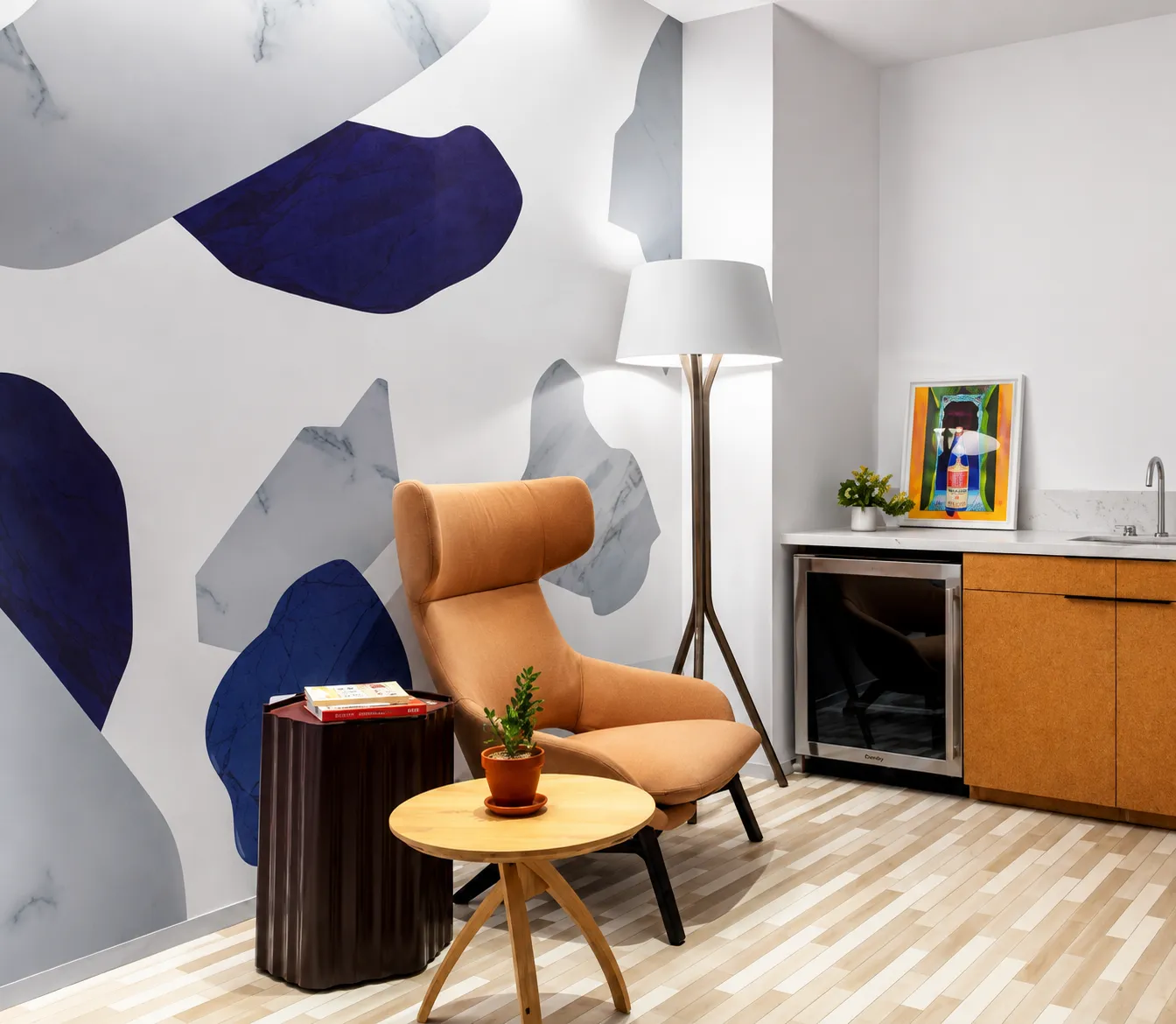
Today’s workplace is evolving beyond simply providing a place to work. Businesses are increasingly focused on creating environments that support employee health, comfort, productivity, and overall well-being. From wellness rooms and improved air quality to natural light, plants, and biophilic design, thoughtful workplace architecture can help reduce stress while creating more inviting and supportive spaces.
By combining smart technology, flexible planning, and a stronger connection to nature, modern office design can play an important role in shaping healthier, more people-focused workplaces.

Health and Wellness
Since the pandemic fundamentally changed how we work, there is a trend to create healthier and safer work environments. The adoption of remote and virtual communication while advantageous for some, was also stressful for many other workers. Many workers with families experienced anxiety and depression due to juggling of multiple responsibilities between work and home. Technology can also be used to enhance worker health and safety; better air filtration, adjustable light levels, occupancy sensors and UV light fixtures that kill germs. There are mobile apps to automate scheduling of meeting spaces and augment access to security.
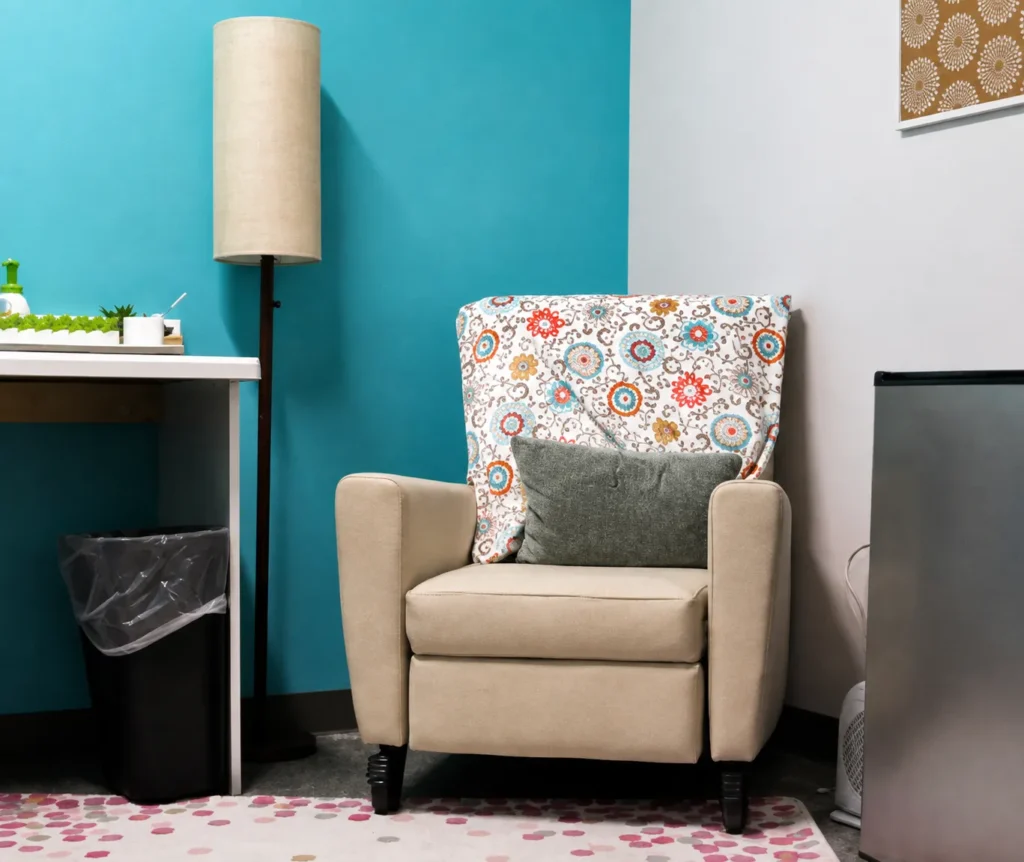
To relieve stress and anxiety, companies have created “wellness rooms” where an employee can de-stress. Mothers’ rooms are also provided where the company encourages women to stay in the workplace after starting a family. Some companies have instigated life coaching, including financial literacy, stress management, and health programs.
Biophilic Design
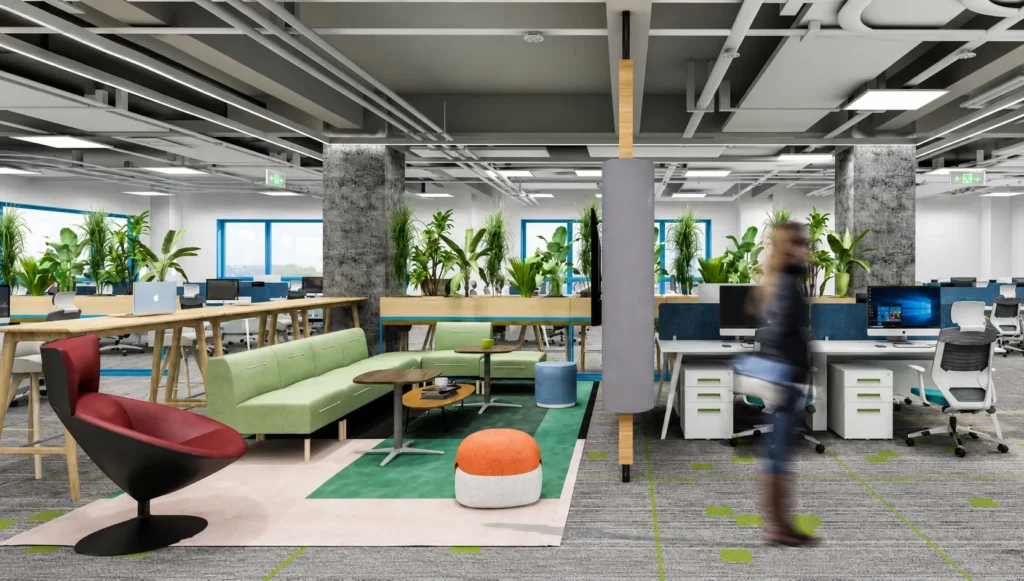
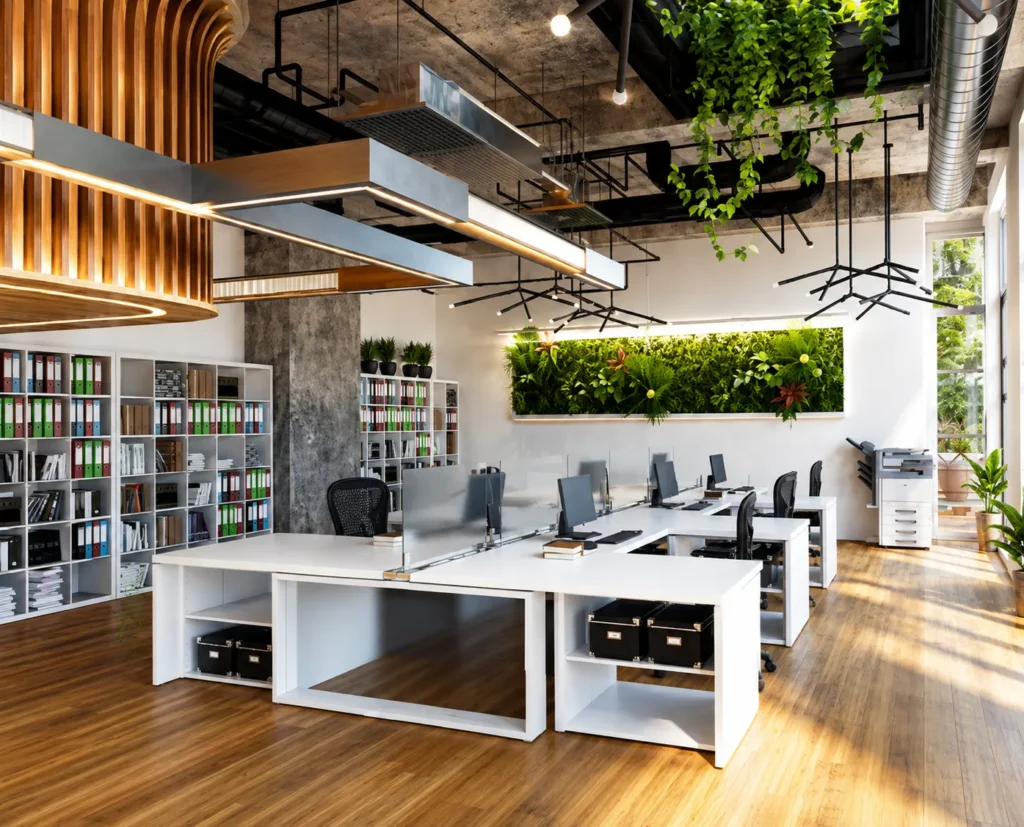
Biophilic Design, the concept of bringing nature into a work environment, is becoming more prevalent. Studies have shown that including elements of nature in the design of a building and its’ interior leads to less stress and better health. This can be accomplished by using natural building materials and finishes, live plants, access to natural light, outdoor spaces and incorporating windows with views to the outside. All these can have a positive impact on the workers. Studies show that the inclusion of static images of nature (sky or landscape vistas, plants & animals) can have the same effect as actual skylights or windows to the exterior. Living walls in an office interior can clean the air and invigorate the space with nature.
As workplace expectations continue to evolve, health, wellness, and biophilic design are becoming increasingly important parts of creating successful office environments. Thoughtful design decisions such as better air quality, access to natural light, flexible wellness spaces, natural materials, and the integration of plants can help create workplaces that feel more comfortable, supportive, and connected to nature.
Ultimately, a healthy workplace is about designing for the people who use it every day. By combining technology, wellness-focused planning, and biophilic design, businesses can create environments that support employee well-being while also encouraging productivity, engagement, and long-term satisfaction.
Leave a Reply